Decoding invisible cultural rules and surviving the psychological warfare of a
Master cross-cultural communication and survive the "False Spring." This newsletter explores the invisible cultural rules and expectations that shape our lives.
Is It Honesty or "Attitude"? Cultural Clashes & The False Spring Trap
This week I came across the work of Tamara Peklic, a Croatian cross-cultural coach who talks about something that many immigrants and international couples experience but often struggle to explain: the invisible cultural rules that shape how we communicate.
Her work focuses a lot on the differences between Eastern Europeans and North Americans — not to criticize either culture, but to help people understand that what often looks like rudeness, distance, or sensitivity is simply culture speaking through us.
And when I started listening to some of her explanations, I had one of those moments where you think:
Oh. That explains a lot.
If you grew up in Eastern Europe, you may know what I mean. Many of us were raised in cultures where communication is direct, honest, and sometimes very straightforward. If something doesn’t make sense, we say it. If we disagree, we say it. If feedback is needed, we give it clearly.
In North America, communication often works a little differently. It is usually more diplomatic, softer, and more focused on maintaining harmony in the conversation.
Neither approach is wrong. They simply come from different cultural expectations.
But when these two styles meet, misunderstandings happen easily.
A direct comment can be interpreted as attitude.
A diplomatic response can be interpreted as avoidance.
I see this sometimes in my own life. Damian will occasionally say that I “have an attitude,” when in reality I am simply being direct and honest in the way I was raised to communicate. It is not meant as confrontation — it is simply the way many of us express clarity.
My honesty cannot really pretend to be something else.
Understanding these differences has also helped me reflect on some of our parenting conversations.
As we are now preparing to transition Alyce into her own big-girl bed and her own room, we’ve had quite a few discussions about sleep arrangements. Because of Alyce’s medical challenges early in life, she has slept in the same room as us since she was born. We needed to hear her alarms and react quickly if something happened.
Over time, this naturally meant she became used to having us close.
What was harder to explain was that this was not only about medical necessity — it is also quite common culturally where I come from. In the Czech Republic, small children often sleep in the same room as their parents for a number of years. It is simply part of how many families function.
But from Damian’s perspective, this sometimes looked like I was being too motherly or holding on to something that should be changed more quickly.
That interpretation didn’t always sit well with me, because the reality is that I have always wanted Alyce to have her own room — a space to play, grow, and eventually sleep independently. Our situation at the beginning was simply different.
The other day something interesting happened. Damian sent me a video of a Danish father explaining that having children sleep in the same room as their parents can actually reduce anxiety and support healthy development.
When he shared the video with me, he added a simple message:
“Let’s talk.”
When I watched the video, I first laughed.
But I was also genuinely happy, because it showed something important: openness to perspective.
That, to me, is what cross-cultural relationships are really about. Not proving one culture right and the other wrong, but staying curious about how different people see the world.
I still believe it will be important for Alyce to have her own room. But I also believe that our different cultural perspectives are part of what makes our family richer.
And if there is one thing I hope for in any cross-cultural relationship — whether in a marriage, a friendship, or a workplace — it is this:
That we remain as open to understanding each other’s cultures as we hope others will be toward ours.
If this topic resonates with you, I highly recommend taking a look at Tamara Peklic’s work, where she shares thoughtful insights about cultural differences and communication between Eastern Europeans and North Americans.
You can find her here:
https://www.instagram.com/tamarapeklic/
Sometimes the hardest part of understanding each other isn’t language.
It’s realizing that we were simply taught different ways to communicate.
The Great Northern Gaslight: Surviving False Spring
It’s the oldest trick in the atmospheric playbook, yet we fall for it every single year with the same wide-eyed optimism. It’s the folklore of the "False Spring," and it’s a masterclass in psychological warfare.
We’ve all been there. It’s the first week of March, and suddenly, the air doesn’t bite back. The thermometer climbs, the eaves start dripping, and for a glorious, fleeting moment, we believe the lie. You hear a bird chirp—a real, rhythmic song, not just a cold-stunted squawk—and your brain skips ahead to June.
You’re out there in a light hoodie, finally ripping down the overdue Christmas decorations. (Getting them down by St. Patrick’s Day is a certified win; it’s practically a neighborhood peace treaty.) You start dreaming of the smell of spring flowers, the first hint of pollen, and the sight of actual grass. You start to believe that winter is finally, mercifully, over. You let your guard down. You start to feel again.
And that’s exactly when the trap springs.
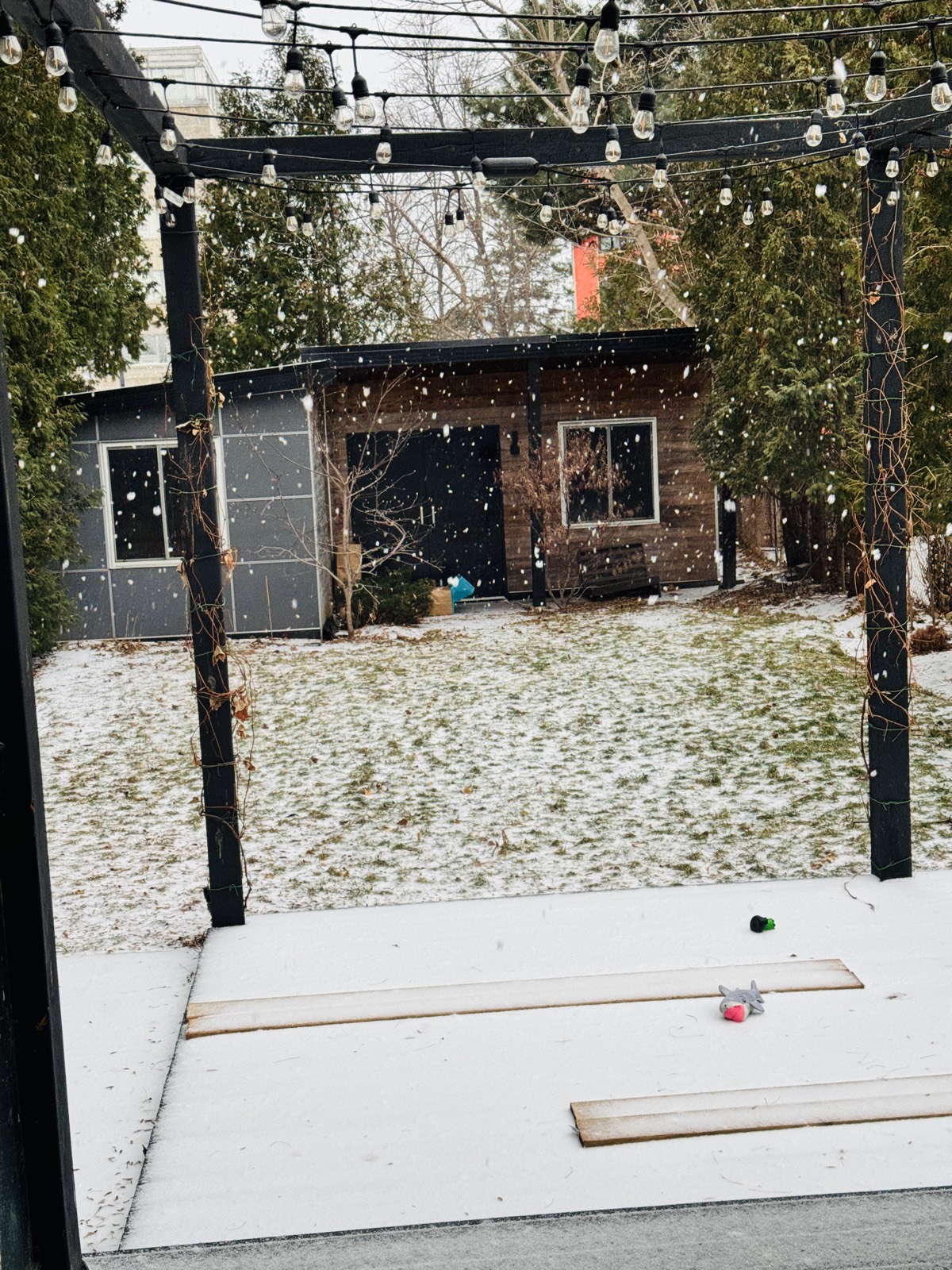
Within forty-eight hours, the birds go silent. The sky turns that bruised, heavy grey, and you’re slammed back to reality by -10° temperatures and freezing rain that punches you right in the soul. It doesn’t matter what the groundhog said or what the almanac predicted. Winter in the Northern Hemisphere is a jealous ex; it isn’t ready to let you go, and it always wants the last laugh.
The Science of the "Soul-Crush"
This transition is so painful because it’s not just happening outside—it’s a violent chemical "reset" inside your head. Your brain essentially gets biological whiplash.
1. The Dopamine Tease: When the sun hits 10°,, your brain’s reward system throws a party. It’s like being promised a steak dinner only to have someone swap it for a frozen turnip at the last second. That "crushed" feeling is a physical reaction to a massive, broken promise.2. Biological Jet Lag: Your internal clock starts shifting your metabolism into "Spring Mode." When the cold returns, your body gets caught in a state of confusion. You aren’t just cold; you’re "biologically jet-lagged," which is why you feel so exhausted and irritable.3. The Serotonin Dip: Sunlight triggers your "happy chemicals." When the grey clouds return for "Second Winter," your levels plummet. Because you just had a taste of the good stuff, the darkness feels five times heavier than it did in the middle of January.4.
Survival Tips for the "Snap Back"
Since your brain is currently being gaslit by the clouds, you have to manually override the system:
1. Don’t Pack the Parka: Putting the heavy gear in the basement is a direct challenge to the weather gods. Keep it by the door as a peace offering.2. The Sensory Swap: When the freezing rain hits, your brain is mourning the loss of those spring scents. Counter it with something high-sensory indoors—light a floral candle or cook something that fills the house with warmth. Tell your brain: "The sun lied, but this soup is real."_3. The "Long Game" Perspective: Even when the grass disappears under a fresh layer of slush, remember: the days _are getting longer. The sun is winning the war, even if it lost this specific battle.
Join the Support Group
We’re all nursing a bruised psyche this week. Reply to this email and tell me: What was the one "Spring" thing you did during the warm spell that you now deeply regret? Did you wash the car? Did you put the snowblower in the back of the shed? Let’s commiserate in the comments.
Hang in there. The soul might be back in hibernation for a bit, but the real thing is coming... eventually.